Bots for the last mile: Rollouts, Security Review

Today we're releasing software development bots that help you get safe, reliable code into production faster.
- Rollouts watches a change from PR to production, flags regressions, and acts to restore a healthy state.
- Security Reviewer finds and fixes security issues in your codebase.
Why we built these
Writing code is no longer the slow part. What hasn't sped up is everything after the PR goes up: making sure code is secure, watching the deploy, deciding whether a latency bump is real, figuring out which of eleven changes broke checkout.
That work is hard, repetitive, and needs a lot of context. Sounds like the type of work that bots should be doing!
We've said we're building toward self-driving codebases. Rollouts and Security Review autonomously handle common tasks every software team wishes they had more expertise and time to do.
Rollouts
Rollouts tracks a change from the moment the PR opens to the moment you're confident it works in production.
Connect source control, your deploy system, and your telemetry (Datadog, Grafana, Honeycomb, or wherever your metrics and traces live). Before merge, Rollouts reads the diff and writes a monitoring plan: the risks it sees, the effects the change is supposed to have, and the places your instrumentation can't tell you whether it worked. Edit the plan if it's missing something.
After deploy, Rollouts compares the signals in the plan against the pre-deploy baseline. When it finds a regression, it tells you which change it suspects and what it plans to do. Depending on how you've configured it, that's a ping to the author, a paused progressive rollout, or a revert PR waiting for approval.
Three things it does well today:
- It catches regressions confined to one endpoint in one region, before a global alert would fire
- It tells intended effects apart from regressions, so a deliberate spike doesn't page anyone
- It flags missing instrumentation before merge, which is the most common reason a bad change goes unnoticed
Coming soon: feature flag integration so Rollouts can ramp and unramp traffic directly, and awareness of release trains and deploy freezes.
Security Reviewer
Security Reviewer runs on every PR, reads the change in the context of the whole codebase, and reports vulnerabilities with an explanation and a proposed fix.
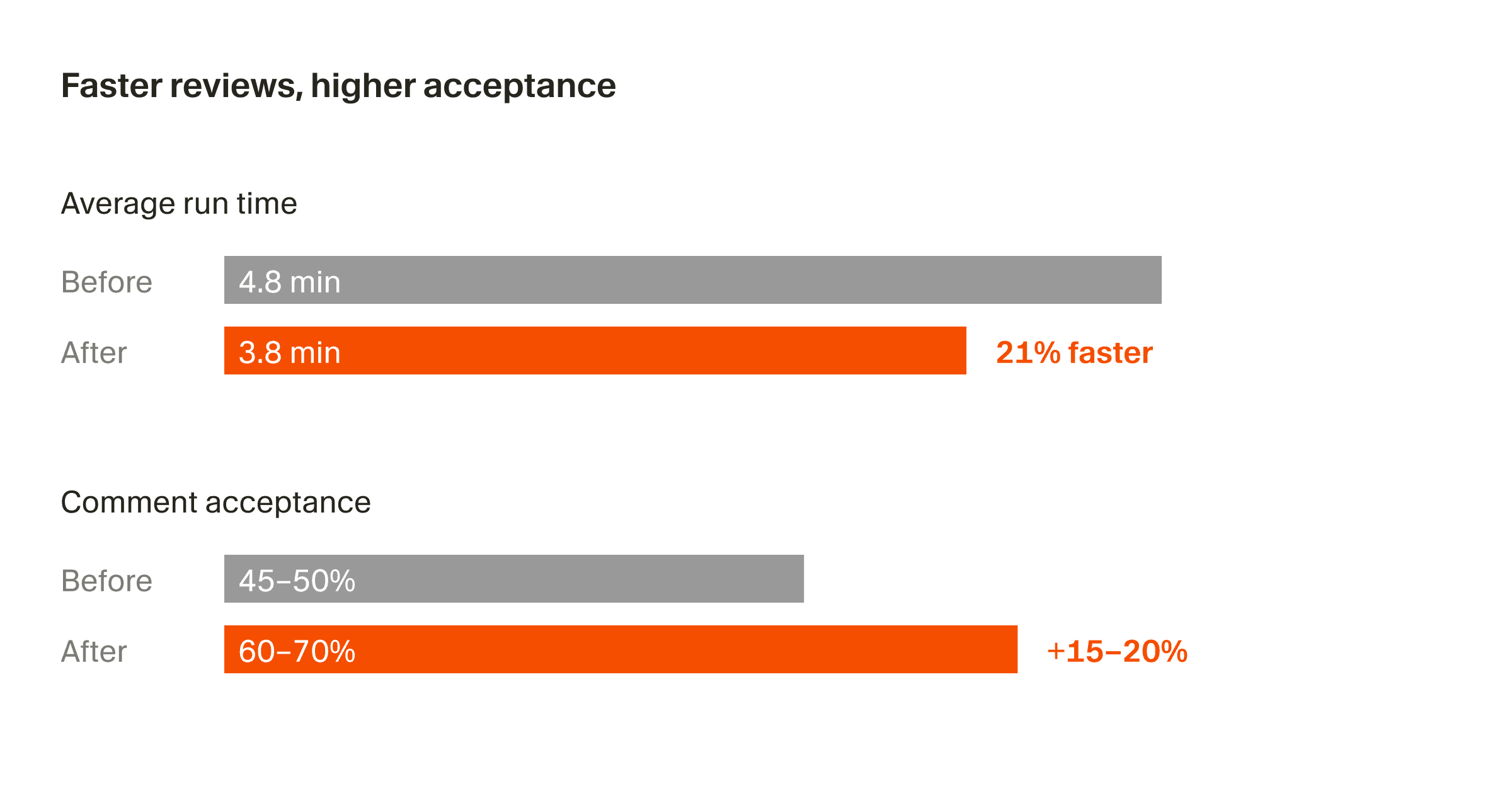
Static analysis pattern-matches: it flags every string concatenation near a SQL call and misses the authorization check that stopped running after a refactor. Security Review reads code the way a security engineer does: where does user input enter, where does it end up, what does it pass through on the way.
Out of the box it looks for:
- Injection across SQL, command, template, and LDAP surfaces
- Missing or broken authentication and authorization on new and changed routes
- Secrets and credentials committed to source
- Unsafe deserialization and unvalidated redirects
- Dependency changes that pull in known vulnerabilities
- Insecure defaults in infrastructure and config
Each finding has a severity, an attack path, and a one-click fix.
Get started
Rollouts and Security Reviewer are available today on Teams and Enterprise plans. Enable either bot from the automations tab to get started.


